Sophomore Slump Is Real — Here's Why Winning Big Can Mess With Your Head More Than Losing

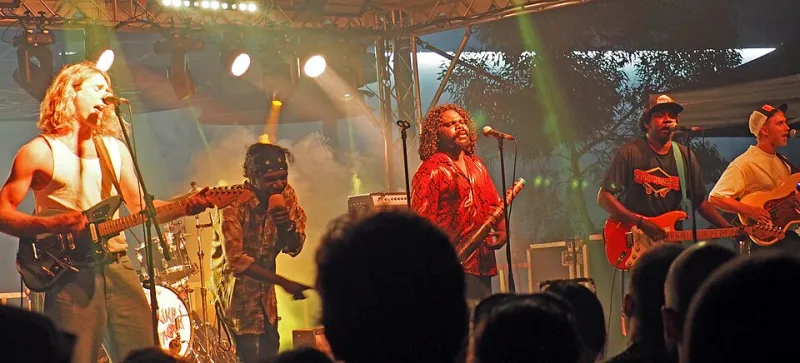
Photo: Chas Demster, CC BY-SA 3.0, via Wikimedia Commons
There's a cruel joke buried inside every breakthrough moment in music. You pour everything into your debut — the years of obscurity, the late nights, the demos nobody wanted, the rejection emails you stopped reading — and then somehow, against the odds, it lands. People stream it. They quote the lyrics back at you. Playlists pick it up. Critics give you the nod.
And then someone asks the question that changes everything: So, what's next?
That's when the floor drops out.
The Paradox Nobody Prepares You For
Here's what's wild about success in the music world: the thing you worked so hard to achieve is the exact thing that makes the next step feel nearly impossible. When you were unknown, you had nothing to lose. You made music for yourself, for your people, for the love of it. There was no expectation to meet, no fanbase to disappoint, no A&R rep refreshing your streaming numbers every Monday morning.
But the moment you break through? All of that changes. Overnight, you inherit a version of yourself that other people built in their heads — and now you have to figure out how to live up to that person while still being the actual artist you've always been.
Psychologists call the resulting spiral imposter syndrome, and it hits artists particularly hard after their first major win. The internal monologue goes something like this: Was that album even that good, or did I just get lucky? Can I do it again? What if people realize I'm actually not that special?
This isn't weakness. It's almost a universal experience among artists who break through — from indie darlings to Grammy nominees. It just doesn't get talked about enough because admitting doubt doesn't exactly play well in promo interviews.
Why the First Album Feels Like a Gift and the Second Feels Like a Test
Think about the conditions under which most debut albums get made. The artist has usually been sitting on those songs for years. They've been road-tested at small venues, refined in bedrooms, filtered through years of genuine personal experience. There's no pressure because there's no audience yet. The work is honest almost by default.
The second album is a completely different animal. Now there's a timeline. There's a label with expectations, or a fanbase with opinions, or a press cycle that's already started before you've written a single note. You're not just making music anymore — you're managing a narrative.
And here's the deeper psychological trap: the more you try to consciously replicate what made the first project work, the further you drift from the instinctive creativity that made it work in the first place. You start second-guessing chord choices that would've felt obvious before. You overthink a lyric that would've rolled off naturally. The internal editor that used to stay quiet now won't shut up.
This is why so many follow-up projects feel overly polished or strangely disconnected from the artist's original voice. It's not that the talent disappeared. It's that the conditions for making music changed dramatically, and nobody gave the artist a roadmap for navigating that shift.
The Spotlight Intensifies the Doubt
There's also something specific about the American music landscape that amplifies this pressure. The US market moves fast and it has a short memory. You can go from breakthrough artist of the year to a trivia question in eighteen months if the follow-up doesn't land right. That cultural reality isn't lost on artists who've gotten a taste of visibility — and it creates a very specific kind of anxiety that's hard to shake.
You start monitoring the discourse. You read the comments even when you swore you wouldn't. You notice when a former co-sign doesn't mention you anymore. The validation that felt so good when it arrived starts to feel conditional, like it could be revoked at any time. And so the second album stops being a creative project and starts feeling like a performance review.
Some artists respond by doubling down on what worked before — essentially making the same album twice. Others swing so hard in the opposite direction trying to prove their range that they alienate the audience they built. Both moves come from the same place: fear masquerading as strategy.
What It Actually Takes to Get Out of Your Own Way
The artists who navigate the sophomore slump most successfully tend to share one trait — they find a way to shrink the audience in their head back down to zero while they're in the creative process. Not forever. Not in denial of the reality of their platform. But during the actual making of the music, they give themselves permission to stop performing for an imagined crowd and start creating for themselves again.
That might mean going back to the same room, the same collaborators, or the same conditions that produced the first project. It might mean deliberately making something that will never see release — just to remind themselves that they can still make things freely. Some artists take themselves off the grid for a stretch, not because they're being dramatic, but because distance from the noise is the only way to hear their own voice clearly again.
Trusting your instincts when the stakes are higher is genuinely hard. But it's also the only move that actually works. Audiences, even the most critical ones, are remarkably good at sensing authenticity. They can tell the difference between an artist who's creating from a real place and one who's manufacturing something designed to please. And ironically, the most crowd-pleasing thing an artist can do is stop trying to please the crowd.
The Long Game
If you're an artist sitting in that uncomfortable space between your first win and your next project, here's the truth: the doubt you're feeling isn't a sign that you don't belong. It's a sign that you care. That matters. The artists who stop caring are the ones who really should be worried.
The pressure of the second album doesn't have to be the thing that breaks you. It can be the thing that forces you to figure out who you actually are as an artist — not who you were when you got lucky, and not who you think people want you to be, but who you are right now with everything you've learned.
That's a harder album to make. But it's almost always the more interesting one.
And at the end of the day, interesting is what lasts.