Before the Headliner Hits the Stage: The Raw Truth About Life as an Opening Act
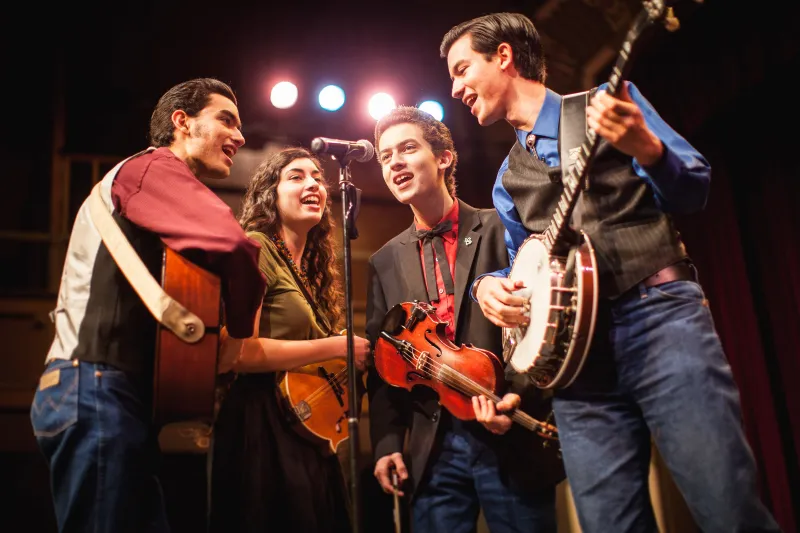
Photo: musician performing on stage small venue empty crowd spotlight, via jooinn.com
Picture this: You've got thirty minutes, a sound system that was set up for someone else, and an audience that is — let's be honest — mostly just waiting for the person whose name is on the ticket. Welcome to the opening act experience. It's unglamorous, it's humbling, and for a lot of artists, it's the crucible that either forges something real or quietly breaks them down.
We don't talk about this part enough. The music industry loves a good origin story, but those stories usually skip straight from "struggling unknown" to "overnight success." What gets edited out is the in-between — those months or years of warming up crowds who didn't come to see you, playing to venues that smell like stale beer at 7 PM, and figuring out how to hold your own when the energy in the room is decidedly not for you.
The Emotional Weight Nobody Prepares You For
Here's what hits first: the loneliness. Not the romantic, artist-in-a-garret kind of loneliness — the practical, logistical kind. You show up to the venue hours before the headliner's team arrives. You do your soundcheck in an empty room. You eat whatever's left in the green room (if you even get a green room). The crew is polite but distracted. Everyone's focus is on the main event, and you are, by design, not that.
For artists who've spent years dreaming about performing live, this reality can feel like a gut punch. You expected the rush of the stage, and instead you got the fluorescent quiet of an afternoon load-in. That psychological gap — between expectation and reality — is where a lot of promising careers quietly unravel before they ever really get started.
There's also the performance anxiety that comes with a uniquely weird pressure: you need the crowd to like you, but not too much. Your job is to build energy for someone else's set. You're supposed to warm the room up, not steal the show. That's a strange creative constraint to work inside of, and it requires a level of emotional intelligence that nobody really teaches.
The Mental Game of Winning Over a Room That Isn't Yours
The artists who thrive in opening slots tend to share one trait: they reframe the whole situation. Instead of seeing a distracted crowd as a rejection, they treat it like a puzzle. How do you get someone to put their phone down when they came here for a different reason? How do you make your music feel urgent to someone who doesn't know a single word of it yet?
This is, honestly, one of the most valuable skills in live performance — and it only gets built through repetition in exactly these uncomfortable conditions. Think about artists like Lizzo, who opened for huge acts for years before breaking through, or Hozier, who spent ages playing support slots across the US before "Take Me to Church" changed everything. They didn't just survive those opening acts; they got sharper because of them.
The trick, according to a lot of artists who've been through it, is specificity. Generic crowd-pleasing doesn't work when you're the opener. People can smell inauthenticity from the back of the room. What actually cuts through is something specific — a story, an energy, a moment of genuine connection that makes someone in row twelve think, wait, who is this person?
The Practical Realities That Don't Fit the Narrative
Beyond the emotional stuff, there are logistics that can genuinely derail you if you're not prepared. Opener contracts are often bare-bones. You might be responsible for your own backline. Your set time might shift with zero notice. Sound issues that would be addressed immediately for the headliner might just... not get fixed for you.
Then there's the money conversation nobody wants to have. A lot of opening slots — especially at the club and theater level — pay very little. Some pay nothing, framed as "exposure." For artists who are already stretched thin financially, this creates real stress that doesn't just disappear when you walk onstage. Learning to compartmentalize that stress, to not let it leak into your performance, is its own kind of discipline.
Merchandise is often a saving grace. Many artists who've done extensive opening tours will tell you that their merch table — not their performance fee — was what kept the lights on. Building a quick, genuine connection with the audience in your short window of stage time translates directly into people stopping by the table afterward. That human moment matters more than any streaming number in those early days.
What Separates a Launchpad From a Ceiling
Some artists spend years in opening act purgatory. Others use a single well-played support slot to completely change their trajectory. What's the difference?
A lot of it comes down to how you use the time off the stage. The artists who break out of the opener tier are usually the ones treating every single night as a research opportunity. They're watching how the headliner structures their set. They're noticing which moments in their own performance made the crowd lean in and which ones lost people. They're building relationships — with venue staff, with the headliner's fans, with other artists on the circuit.
There's also something to be said for sheer consistency. Showing up fully, every night, even when the room is small and the energy is low — that builds a kind of professional reputation that travels. The music industry is smaller than it looks, and word gets around fast about who's a serious performer and who falls apart when conditions aren't perfect.
The Slot That Changes Everything
Every artist who's made it has a story about the opening act moment that shifted something. Sometimes it's a night when the crowd actually turned — when the room that came for someone else left genuinely excited about you. Sometimes it's more internal: a night when something clicked, when you finally stopped performing at the audience and started performing with them.
Those moments don't happen without all the hard, unglamorous nights that came before them. The loneliness of the opening act isn't a flaw in the career path — it's the path. It's where you figure out who you are as a performer when nobody's obligated to care. And the artists who come out the other side of that? They're usually unshakeable.
The main event gets all the glory. But the opening act gets something more valuable: the truth about what they're actually made of.