Bet on Yourself First: The Surprisingly Smart Science Behind Irrational Self-Belief
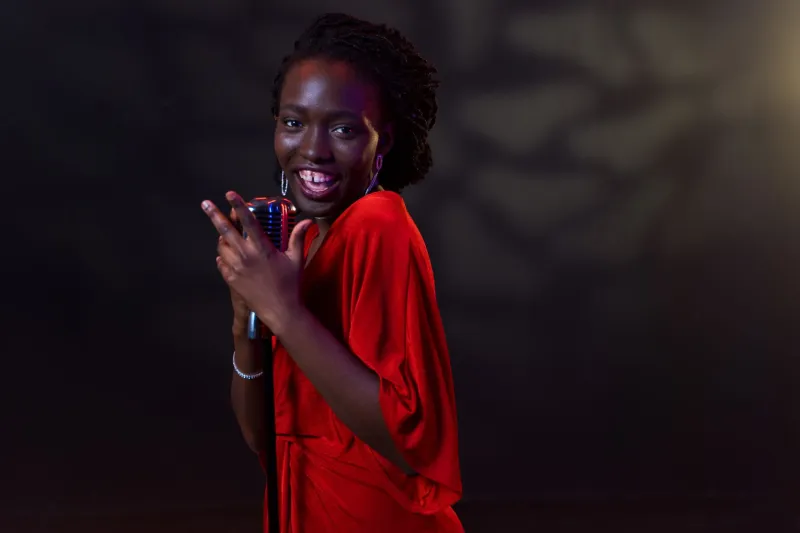
There's a moment every artist knows. You're performing to eleven people in a half-empty bar, or posting a video that gets twelve views — six of which are you refreshing the page — and somewhere deep in your chest, you still feel it. That unshakeable, slightly embarrassing, completely unjustified conviction that this is going to work.
The world has a word for that feeling. They call it delusion.
But here's the thing: maybe they're wrong.
The Myth of Waiting for Permission
American culture has a complicated relationship with confidence. We celebrate it in hindsight — we love the origin story, the scrappy underdog who never stopped believing — but we're pretty quick to call it cringe when we see it happening in real time. There's an unspoken rule that says you're supposed to wait for some kind of external green light before you fully commit to the idea that you belong.
Wait for the label to sign you. Wait for the playlist feature. Wait for the co-sign from someone who already made it.
The problem? That green light almost never comes first. Belief has to come before proof. That's not motivational poster fluff — it's just how the math actually works.
Think about Rihanna showing up to that first audition with Evan Rogers. She was a teenager from Barbados with virtually no industry connections and zero chart history. By any rational metric, the odds were laughable. But she reportedly walked into that room like she already owned it. Rogers later said he knew immediately. Not because her resume backed it up — it didn't — but because her certainty was contagious.
Or look at someone like Nipsey Hussle, who spent years building his own lane through Crenshaw before the mainstream caught up. He didn't wait for a major to validate his vision. He printed his own merch, sold his own mixtapes, and acted like the empire was already real. Then it became real.
What Psychologists Actually Say About This
Here's where it gets interesting. There's legitimate research behind what feels like reckless optimism. Psychologists call it self-efficacy — the belief in your own capacity to execute a specific task — and study after study shows it's one of the strongest predictors of actual performance.
Albert Bandura, the Stanford psychologist who developed the concept, found that people with high self-efficacy don't just feel better about their chances. They literally perform differently. They persist longer when things get hard. They reframe obstacles as problems to solve rather than signs to quit. They recover faster from setbacks.
In other words, believing you can do something — even before you've proven it — physically changes the way you show up to do it. That's not magic. That's neuroscience.
The key distinction, though, is between productive self-belief and straight-up denial. One is a strategy. The other is a trap.
Controlled Delusion vs. Blind Arrogance
There's a version of this that goes wrong. We've all seen it — the artist who's so convinced of their own greatness that they stop listening, stop growing, stop taking notes. That's not self-belief. That's ego operating as a defense mechanism, and it usually stalls careers more than it builds them.
The artists who use irrational self-belief as an actual advantage tend to do something slightly different: they believe in their potential while staying genuinely curious about their current gaps. They hold both things at once. I am going to make it and I have a lot to learn aren't contradictions. They're the whole formula.
Teni has talked about this kind of energy in her own journey — the way she carried herself into rooms where nobody knew her name, not with arrogance, but with this quiet certainty that she had something real to offer. That energy changes how people receive you. It changes the conversations you get invited into. It changes which doors stay open.
The Practical Upside Nobody Talks About
Beyond the psychology, there's a straight-up practical case for betting on yourself early.
When you operate from a place of deep self-belief, you make different decisions. You invest in your craft instead of waiting to see if it's "worth it." You reach out to collaborators you'd normally consider out of your league. You say yes to the opportunity that looks small but puts you in the right room. You build the infrastructure for a career before the career technically exists.
Artists who wait for external validation tend to move in reaction. They're always playing catch-up — upgrading their setup after someone notices them, building their team after they need one, developing their live show after they've already got a booking agent asking about touring.
Artists who operate on self-belief tend to move in preparation. They're ready when the moment comes because they spent years acting like the moment was already on its way.
That's not delusion. That's just good planning with a confident soundtrack.
So What Does This Actually Look Like Day to Day?
It's not about walking around telling everyone you're going to be famous. That's just noise. Real self-belief is quieter than that — it lives in your choices more than your announcements.
It looks like practicing your craft on days when nothing is happening externally. It looks like introducing yourself as an artist, not as someone who's trying to be an artist. It looks like treating every small show like it matters, because you understand that the habits you build in obscurity are the same ones you'll have when the spotlight finds you.
It also looks like protecting your energy from people who need you to be smaller so they can feel comfortable. Not with hostility — just with boundaries. You can love someone and still not let their doubt become your operating system.
The Long Game
Here's the honest truth: most of the people who bet on themselves early are going to face a long stretch where the bet doesn't seem to be paying off. That's part of the deal. The whole point of believing before proof exists is that proof takes time to show up.
What separates the ones who make it isn't talent alone. It's the ability to stay consistent in that gap between belief and evidence — to keep showing up, keep creating, keep building, even when the world hasn't caught up yet.
Call it delulu if you want. But from where we're standing, it looks a lot like the only strategy that's ever actually worked.