Everyone's Cheering and You've Never Felt More Alone: The Dark Side of Going Viral
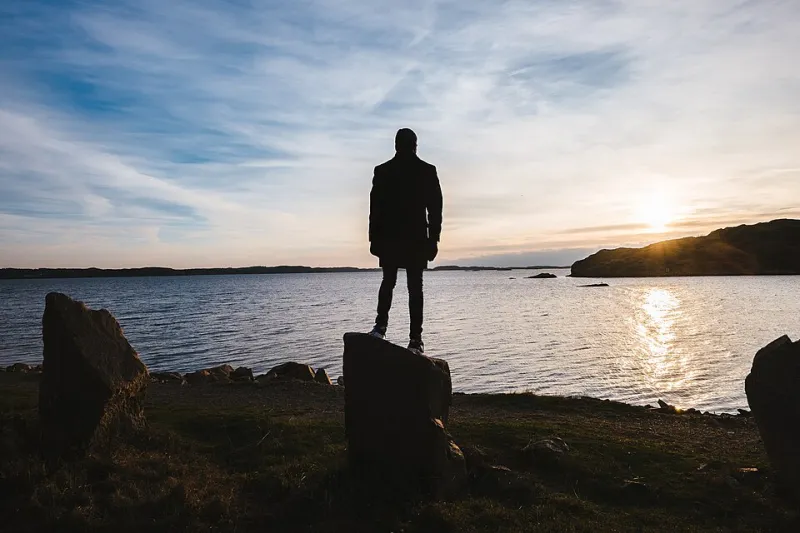
Photo: Magnus Lindvall dnmgns, CC0, via Wikimedia Commons
Imagine waking up on a Tuesday morning to 47 text messages, a DM inbox that looks like a war zone, and a video of yourself racking up a million views before you've even had coffee. Sounds like a dream, right? For a lot of artists and public figures, that exact moment — the one they spent years grinding toward — turns out to be one of the strangest, most isolating experiences of their lives.
Nobody really prepares you for that part.
The Moment the World Shows Up and You Check Out
There's this weird phenomenon that happens when something you made goes viral. One second you're a regular person with a regular-sized audience, and then — almost overnight — you're a meme, a moment, a movement. The internet collectively decides you're the thing right now, and the energy is electric.
But here's what the highlight reels don't show: the person at the center of all that attention is often completely overwhelmed. Not in a cute, humble way. In a genuine "I don't know who I am right now" kind of way.
When everything blows up fast, there's almost no time to process what's happening. You go from making something personal — a song, a video, a clip that felt like yours — to watching it get dissected, remixed, debated, and occasionally misrepresented by people who don't know you at all. The thing that felt intimate suddenly belongs to everyone. And that shift can feel like a loss, even when the numbers say you should be celebrating.
The Isolation Nobody Warns You About
Here's the cruel irony of sudden fame: the more people are talking about you, the harder it becomes to have a real conversation with anyone.
Your close friends don't quite know how to act. Some are genuinely excited for you. Others get weird — maybe a little distant, maybe a little too interested. The people who were there before the moment feel far away, and the flood of new followers and supporters, however enthusiastic, don't actually know you. They know the version of you that went viral. That's a completely different thing.
Artists who've navigated this kind of rapid visibility often describe a feeling of being surrounded by noise while standing in silence. You can be on a Zoom call with your team, watching your streaming numbers climb in real time, and still feel profoundly disconnected from the whole experience. It's disorienting in a way that's hard to explain without sounding ungrateful — which is part of why so few people talk about it publicly.
The Pressure to Perform Your Own Success
Once you go viral, there's this immediate, unspoken expectation that you'll perform your happiness about it. Post a reaction. Go live. Thank the fans. Ride the wave. The algorithm rewards momentum, and momentum requires showing up — even when you're running on empty.
That performance pressure is genuinely exhausting. You're not just managing your career anymore; you're managing the narrative around your career. Every post becomes a calculation. Every interview is a chance to either cement the moment or accidentally say something that unravels it. The creative freedom that probably sparked the original viral moment? It starts to feel like a luxury you can't afford right now.
For artists especially, this is where things get dangerous. The version of yourself that made something authentic enough to resonate with millions of people gets slowly replaced by a more careful, more managed version. And that managed version is rarely as interesting — or as honest.
When Your Inner Circle Can't Keep Up
One of the quieter casualties of going viral is the strain it puts on personal relationships. Not because the people around you don't care, but because the experience is genuinely hard to share. Unless someone has been through it themselves, they can't fully understand the specific cocktail of exhilaration, anxiety, and grief that comes with it.
Mental health professionals who work with performers and public figures have noted a consistent pattern: sudden visibility often triggers symptoms that look a lot like anxiety and depression, even in people who actively wanted fame. The loss of privacy, the collapse of the boundary between public and private self, and the relentless pace of online culture all combine to create real psychological stress.
And yet, because the world is celebrating, it feels wrong to admit you're struggling. There's a shame in saying "this is hard" when, by every external measure, you're winning.
Finding Ground When Everything's Moving
So what actually helps? Talking to artists and public figures who've been through the viral experience, a few things come up consistently.
Protecting your offline life is non-negotiable. The people who seem to navigate sudden fame with the most grace tend to be the ones who have something real to come home to — whether that's a tight-knit group of friends who knew them before, a creative practice that isn't tied to public output, or a physical routine that keeps them anchored.
Slowing down the response cycle matters more than you think. Not every viral moment needs to be immediately leveraged. Taking even a few days before making major decisions — about follow-up projects, press opportunities, or public statements — can be the difference between building something sustainable and burning out in the afterglow.
Therapy isn't a crisis tool; it's a maintenance tool. Having a professional to talk to before things get overwhelming is infinitely more useful than trying to find one in the middle of a spiral. More artists are being open about this, and that normalization is genuinely changing the culture around mental health in the music world.
The Part the Internet Skips
We love a viral moment. We love the before-and-after story, the overnight success narrative, the idea that one video or one song can change everything. And sometimes it does change everything — just not always in the ways we imagine.
The emotional whiplash of going from unknown to everywhere is real, and it deserves more honest conversation than it typically gets. Behind every clip that breaks the internet is a human being trying to figure out who they are on the other side of it.
If you're in that moment right now — or if someone you know is — the most important thing might just be this: it's okay for the best moment of your career to also be one of the hardest. Those two things can exist at the same time. And acknowledging that isn't weakness. It's just the truth that the highlight reel leaves out.