Your Favorite Artist Has 10 Million Streams and Nobody Actually Knows Their Name
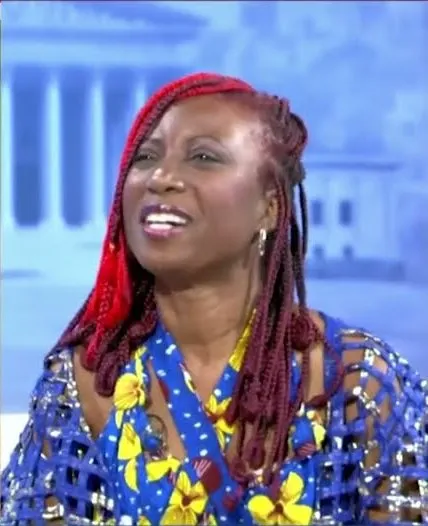
Photo: Ksm1907, CC BY-SA 4.0, via Wikimedia Commons
Open up any music industry newsletter on any given Monday and you'll find the same thing: charts, numbers, percentages, projections. This artist hit a billion streams. That one debuted at number three. This album had the biggest opening week of the quarter. And somewhere underneath all those metrics, buried like a footnote, is the actual music.
We did this to ourselves. And it's worth asking — at what cost?
The Scoreboard We Built
Streaming changed everything about how we measure success in music, and not entirely in the ways the industry predicted. On paper, it democratized access. Independent artists could theoretically reach the same audience as major label acts. Listeners in rural Kansas could discover a bedroom pop producer from Lagos without ever setting foot in a record store.
All of that is genuinely true. And genuinely good.
But here's what nobody fully anticipated: the moment you attach a visible number to something, human psychology kicks in and the number becomes the thing. Not the art. Not the experience. Not the way a song hits differently at 2 a.m. when you're driving alone on an empty highway. The number.
Now artists — and the teams around them — optimize for streams the way e-commerce brands optimize for click-through rates. Songs are engineered to keep listeners from skipping in the first 30 seconds (the threshold at which a stream counts on most platforms). Albums are structured to maximize playlist placement. Hooks are front-loaded. Intros are eliminated. The whole shape of music is bending around an algorithm's preferences, and we're calling it success when the numbers go up.
What Gets Lost in the Data
Here's a question worth sitting with: can you name five artists who genuinely changed your life? Songs that rewired something in you, that you associate with a specific moment or person or version of yourself?
Now go look up their streaming numbers.
I'd be willing to bet that at least two or three of those artists — the ones who actually meant something to you — don't crack the top tier of any streaming chart. Because cultural impact and algorithmic success are not the same thing, and we've spent the last decade pretending they are.
Big Freedia has been the godmother of bounce music for over two decades, influencing artists from Beyoncé to Drake. Her streaming numbers don't reflect that. Valerie June has been making some of the most soulful, emotionally complex Americana music in the country for years. Critically beloved. Algorithmically invisible. And then there's the entire universe of regional music — the hyper-local scenes that shape culture in ways that never register on a national chart but are absolutely foundational to the people who live inside them.
Metrics don't capture roots. They capture reach. And those are very different things.
The Follower Economy and Its Empty Promises
It's not just streaming. Social media follower counts have become the entertainment industry's version of a credit score — a single number that supposedly tells you everything about someone's value and influence, when actually it tells you almost nothing.
We've all seen the accounts with millions of followers and engagement rates so low they'd make a marketing intern cry. And we've all seen the creators with 50,000 deeply engaged, fiercely loyal fans who would follow them off a cliff — who are constantly overlooked because the number isn't big enough to impress a brand deal spreadsheet.
The word we're actually looking for here is community. Not audience. Community.
An audience watches. A community participates, advocates, shows up, converts, remembers. The difference between an artist with 500,000 true community members and one with 5 million passive followers is enormous — in terms of real-world impact, in terms of longevity, in terms of what actually gets built over a career. But the metrics don't show you that distinction. They flatten everything into the same unit of measurement.
Legacy Doesn't Live in a Dashboard
Let's talk about legacy for a second, because this is where the metrics conversation gets really interesting.
When we look back at the artists who genuinely shaped American music — the ones who get studied, sampled, referenced, and revered decades after their moment — almost none of them were the biggest chart performers of their era. Robert Johnson never had a number one hit. Nick Drake sold almost nothing in his lifetime. Arthur Russell was basically unknown outside of a small New York scene. Townes Van Zandt was a cult figure at best.
And yet. Their influence is woven into the fabric of music in ways that are still unfolding.
Legacy is not a metric. It's a relationship between art and time, between a body of work and the people it keeps finding. You can't A/B test your way to it. You can't optimize for it. The only thing you can do is make something real enough, honest enough, and human enough that it keeps mattering after the algorithm moves on.
What This Means for Creators Right Now
If you're an artist, a producer, a songwriter, or any kind of creative person trying to figure out your place in this landscape — here's the uncomfortable truth: you probably need to care about the numbers enough to play the game, while caring about them only enough to play the game.
Use the tools. Learn the platforms. Understand what drives discovery. But don't let the scoreboard become your compass. Because the moment your creative decisions are primarily driven by what the algorithm wants, you've traded the thing that makes you irreplaceable for something that can be replicated by anyone willing to follow the same formula.
The artists who build lasting careers — and this is as true for an emerging independent act as it is for a global superstar — are the ones who maintain a creative core that exists outside the metrics conversation. Who make things they'd make even if nobody was counting.
What This Means for Fans
And if you're a listener, a fan, someone who just loves music and wants to support the artists who matter to you? Stop outsourcing your taste to the algorithm.
Stream the small artist. Show up to the local show. Tell a friend about the song that wrecked you. Buy the vinyl if you can. Leave the comment that's actually about the music, not just an emoji.
The most powerful distribution system in music has always been word of mouth — one person telling another person you need to hear this. That hasn't changed. The platforms have just gotten very good at making us forget it.
The Real Measure
So what does actually matter? If not streams, not followers, not chart positions — then what?
Connection. Specificity. The feeling of being understood by something you heard. The way a song can make a room full of strangers feel, for three and a half minutes, like they all know each other. The artist whose work you return to in the hard moments because it's the only thing that fits.
That stuff doesn't live in a dashboard. But it's the only stuff that lasts.