That 'Raw' Moment Your Favorite Artist Just Posted? Someone Approved It First
It's 11:47 PM on a Tuesday. Your favorite artist just dropped a voice memo on their Instagram story — shaky audio, no filter, a little tearful. They're 'just being real with you guys.' The comments flood in within minutes. This is why I love them. So genuine. No cap, this is the most human they've ever been.
And somewhere in a group chat with their manager, publicist, and social media strategist, someone is watching the engagement numbers tick up in real time.
This isn't cynicism. This is just 2024.
The Architecture of the 'Unfiltered' Moment
Authenticity didn't stop being valuable — it became too valuable to leave to chance. That's the quiet shift that happened somewhere between the early days of Twitter and the current era of meticulously managed parasocial relationships. The demand for 'real' content got so high that an entire industry grew up around manufacturing it.
Think about what goes into a seemingly spontaneous celebrity moment. The timing — does it drop during peak engagement hours? The platform — is this a story that disappears, a permanent post, or a clip seeded to a podcast? The content itself — is it vague enough to feel universal but specific enough to feel personal? Is there a project to promote within the next 30 days?
None of this means the emotion isn't real. It might be completely genuine. But the delivery of that emotion has been optimized, workshopped, and in many cases A/B tested across multiple platform strategies before it ever reaches your screen.
Spontaneity Has a Scheduling Calendar
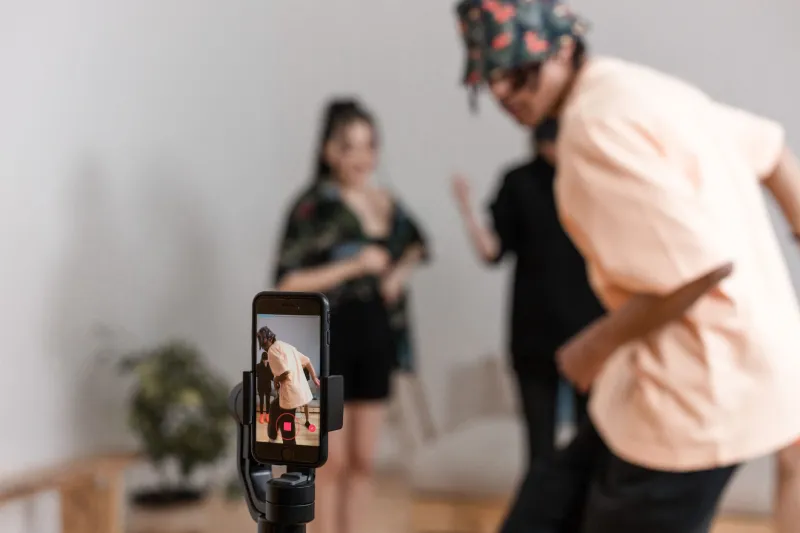
Here's a detail that tends to make people uncomfortable: many of the 'random' livestreams you've watched were rehearsed. Not scripted word-for-word, but structured. Talking points were discussed. Topics to avoid were agreed upon. The 'I don't really know why I'm even going live right now' energy? That's a choice.
The same goes for the perfectly imperfect studio session clips, the candid backstage photos that somehow always have great lighting, and the 'no makeup, just woke up' content that required a specific ring light and a practiced casual energy.
This isn't unique to mega-celebrities, either. Independent artists with 50,000 followers are running the same playbook because it works, and because the platforms algorithmically reward content that reads as authentic while being frequent and consistent — two things that are almost impossible to achieve if you're actually just posting whatever you feel like.
So Is Any of It Real?
This is where the conversation usually goes sideways, because people want a binary answer and there isn't one.
Yes, the vulnerability can be genuine. Yes, the tears might be real tears. Yes, the artist might actually feel close to their audience in ways that matter. None of that is negated by the fact that someone decided Tuesday night at 11 PM was a better posting window than Thursday afternoon.
What's shifted is the relationship between feeling and timing. In the pre-social media era, an artist might sit on a painful experience for years before it became a song or an interview moment. Now, that same experience gets processed, packaged, and deployed — sometimes within the same week — as content that serves a strategic purpose while also being emotionally true.
Both things can be real at once. The feeling and the strategy. That's the part that's genuinely new.
Do Audiences Actually Want True Spontaneity Anymore?
Here's the uncomfortable question that doesn't get asked enough: if an artist actually did go fully off-script — no strategy, no timing, no filter — would we even like it?
Real spontaneity is messy. It's bad takes at 3 AM that don't get deleted fast enough. It's rambling livestreams that go nowhere. It's the kind of honesty that makes you cringe for the person saying it. We've seen what that looks like, and the comment sections are rarely kind.
What audiences actually respond to is the feeling of spontaneity within a container that still feels safe and coherent. We want to feel like we're getting access, but we don't really want the chaos that comes with actual unmediated access to another person's inner life. The polished version of 'real' isn't a compromise — it might actually be what we were asking for all along.
The Ethics of Manufactured Authenticity
Where this gets genuinely thorny is when the performance of vulnerability is used to manipulate rather than connect. There's a meaningful difference between an artist who shares a real emotion through a strategically timed post and an artist (or their team) who fabricates a crisis, engineers a controversy, or performs grief they don't feel because the engagement data says it converts.
Audiences are getting better at detecting the latter, even if they can't always articulate why something feels off. There's a texture to real emotional content that's hard to fake consistently — and when the fakery slips, the backlash tends to be severe precisely because it violates the one thing audiences thought they could trust.
The line isn't between planned and unplanned. It's between honest and dishonest. You can be strategic and still be telling the truth. You can be spontaneous and still be performing.
What It Means for the Rest of Us
If you're an artist trying to build something real in this environment, the takeaway isn't that you need to hire a team to manufacture your rawness. It's that you need to be intentional about what you share and why — not because spontaneity is dead, but because thoughtfulness about your own story is a form of respect for both yourself and the people paying attention.
And if you're a fan? Maybe the move is to hold the content a little more lightly. Appreciate the emotion without building your entire parasocial relationship on the assumption that what you're seeing is the whole, unedited truth.
It almost never is. And that's okay. Art has always been a shaped version of reality. We're just watching the shaping happen in real time now.